There's nothing quite like a day on the trails in Western North Carolina. The Blue Ridge Parkway alone offers over 469 miles of scenic ridgeline driving and countless trailheads — from easy wildflower walks to grueling summit scrambles. Add in the trails at the NC Arboretum, Bent Creek Experimental Forest, and the mountains around Asheville, and you've got some of the best hiking in the Southeast.
But your body pays a price. Steep elevation changes, uneven terrain, and hours of continuous movement put serious demand on your legs, hips, back, and feet. If you're not recovering intentionally, soreness can linger for days and set you up for injury on your next outing.
As a licensed massage therapist in West Asheville — right near many of these trails — I work with hikers regularly. Here are the recovery strategies that make the biggest difference.
7 Best Recovery Techniques for Asheville Hikers
-
Get a Post-Hike Massage Within 48 Hours
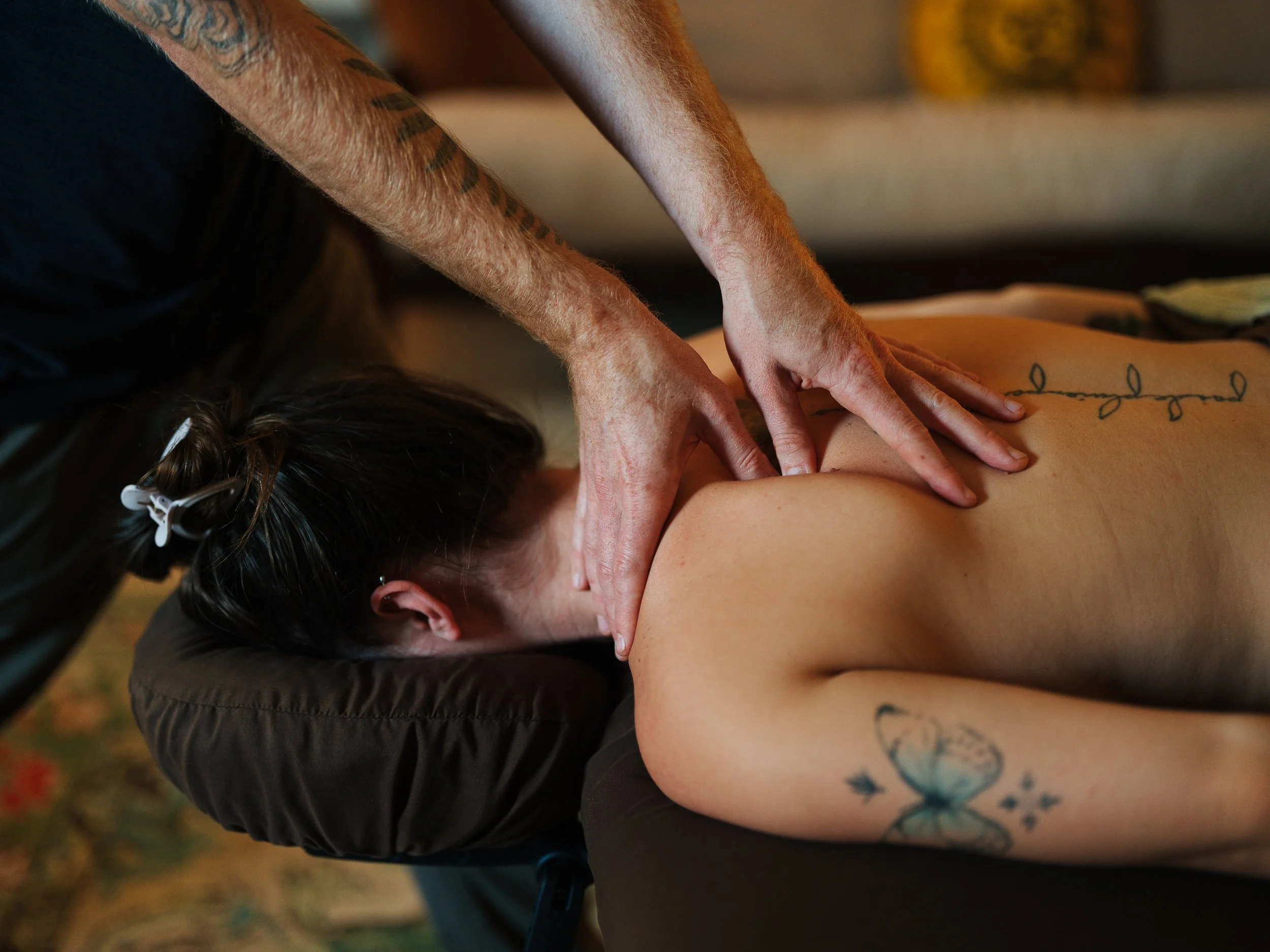
This is the single most effective recovery tool for hikers. A skilled massage therapist can flush metabolic waste from overtaxed muscles, restore range of motion in stiff joints, and release the specific tension patterns that hiking creates — tight calves, locked-up hip flexors, compressed low back.
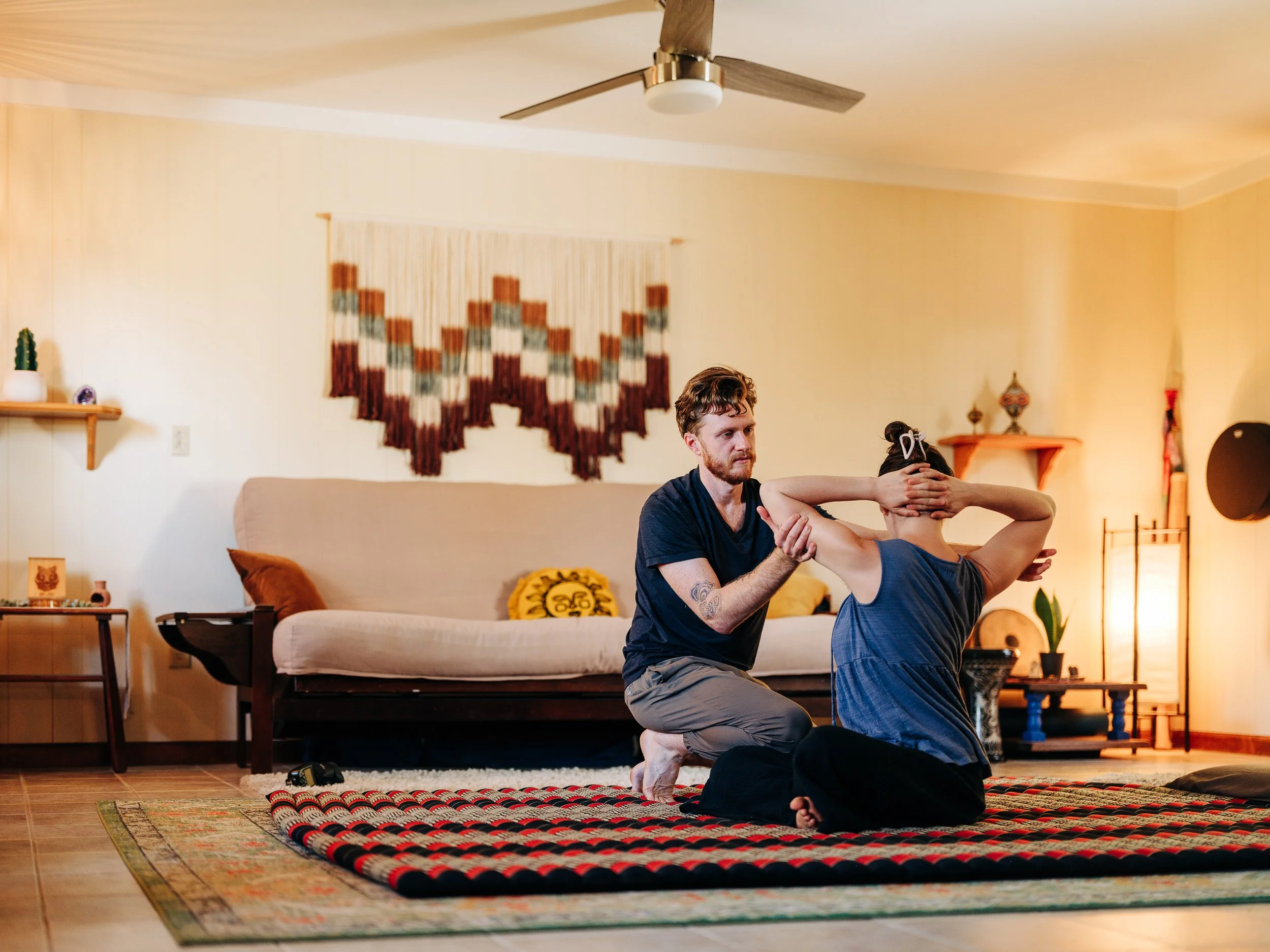
At Zen Fox Healing Arts, I use an integrative approach that combines deep tissue work on your legs and glutes with myofascial release for your IT band, Thai stretches for your hips, and gentle decompression for your spine. It's not a generic relaxation massage — it's targeted recovery work for active bodies. -
Stretch Your Hip Flexors and Calves Immediately
Hiking uphill shortens the hip flexors; hiking downhill hammers the calves and quads. These are the two areas that get tightest after a day on the Parkway. Spend at least 5–10 minutes post-hike doing:
• Low lunge stretch — Hold 60 seconds each side. Focus on pressing your hip forward, not arching your back.
• Wall calf stretch — Step one foot back, press the heel down, lean into the wall. Hold 45 seconds.
• Figure-four stretch — Lying on your back, cross one ankle over the opposite knee and pull toward your chest. This opens the piriformis and deep glute muscles that work overtime on uneven terrain. -
Hydrate with Electrolytes, Not Just Water
Mountain hiking at elevation — even modest elevation like the Blue Ridge — increases your respiratory water loss. Sweating depletes sodium, potassium, and magnesium. Plain water alone won't replace what you've lost.
Add an electrolyte mix to your post-hike water. Your muscles need those minerals to relax properly. Cramping and stiffness are often dehydration issues disguised as muscle problems. -
Use Contrast Therapy (Hot and Cold)
Alternating between heat and cold stimulates blood flow without putting additional load on your body. After a long hike, try:
• 3 minutes warm shower / 1 minute cold — repeat 3–4 cycles
• End on cold to reduce inflammation
If you have access to a cold plunge or natural creek (Bent Creek is right here), even better. The cold reduces inflammatory markers in your muscles; the heat relaxes and increases circulation. -
Foam Roll Your IT Band and Quads
The iliotibial band — the thick fascial band running from your hip to your knee — takes a beating on downhill sections. A foam roller applied slowly along the outside of your thigh can break up adhesions and reduce that dull ache in your outer knee that so many hikers experience.
Roll slowly. If you hit a tender spot, pause and breathe into it for 20–30 seconds before moving on. -
Elevate Your Legs for 15–20 Minutes
It sounds simple, but it works. Lying on your back with your legs up against a wall (or draped over a couch) uses gravity to drain pooled blood and lymphatic fluid from your lower legs. This reduces swelling and that heavy, leaden feeling in your feet and calves.
Do this within an hour of finishing your hike for maximum benefit. -
Try Cupping Therapy for Deep Recovery
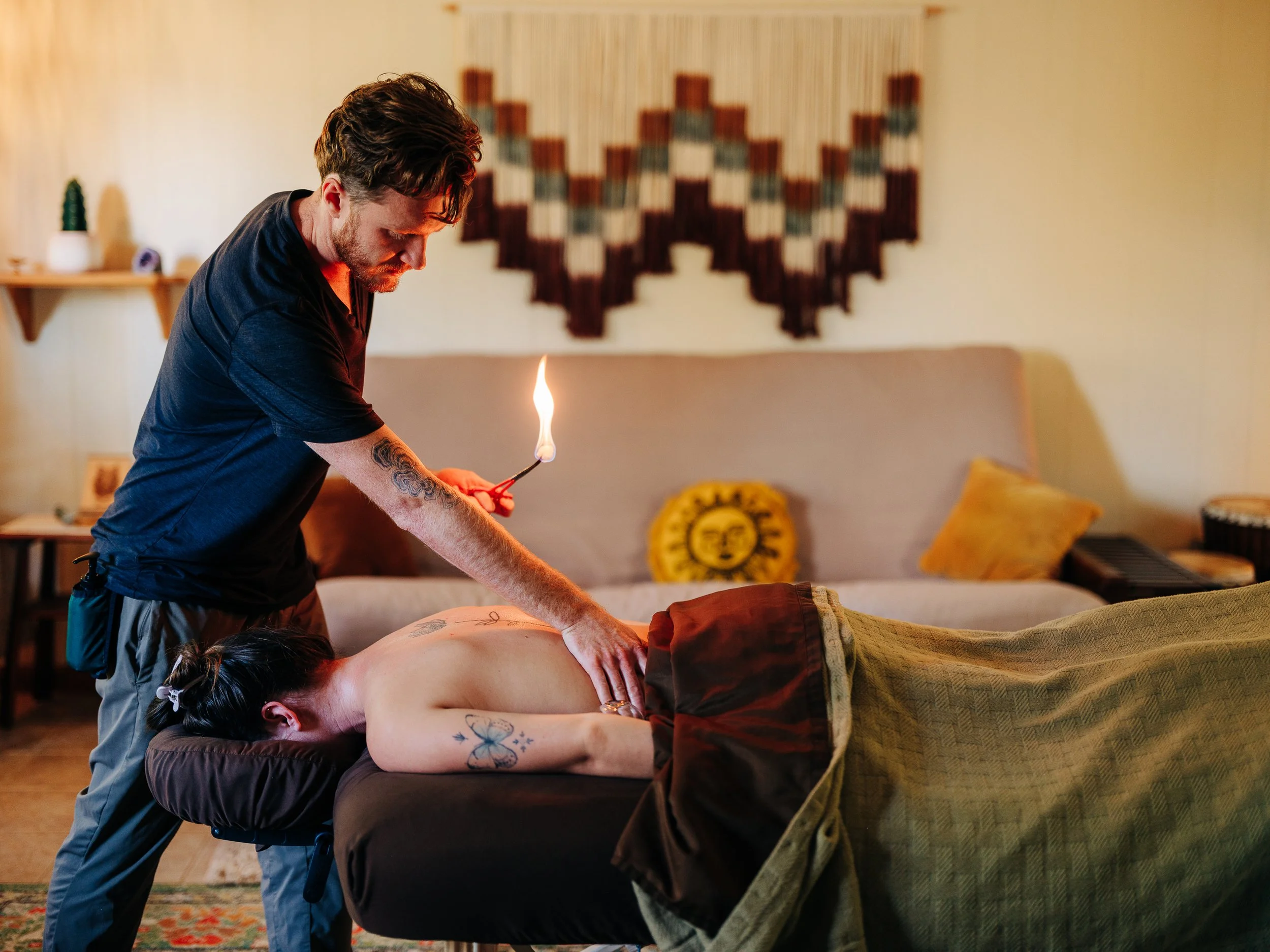
Cupping therapy is exceptionally effective for hiking recovery. The suction pulls blood into depleted tissue, accelerates healing, and releases tension in areas that are hard to reach with hands alone — particularly the deep layers of the calves, hamstrings, and the muscles along your spine.
At Zen Fox Healing Arts, I often combine cupping with massage for clients who've been doing serious trail days. The recovery difference is dramatic.
When Should You Get a Massage After Hiking?
The ideal window is 24–48 hours after your hike. This gives the initial acute inflammation time to subside, but catches the soreness before it fully sets in (delayed onset muscle soreness typically peaks 24–72 hours post-activity).
If you're planning a multi-day hiking trip in the Asheville area — maybe exploring the Blue Ridge Parkway, the NC Arboretum trails, and the Bent Creek network — scheduling a massage mid-trip can make your later trail days significantly more comfortable.
Popular Trails Near the Studio
The Zen Fox Healing Arts studio is in West Asheville, off Brevard Road — which puts it within 10 minutes of some of the area's best trails:
- Bent Creek Experimental Forest — Miles of moderate hiking and mountain biking trails through hardwood forest. Popular for locals.
- NC Arboretum Trails — 10+ miles of well-maintained trails through the 434-acre arboretum. Great for all fitness levels.
- Blue Ridge Parkway Overlooks & Trails — Access points along the Parkway offer everything from short walks to strenuous all-day hikes.
- Pisgah National Forest — Just down Brevard Road, with access to waterfall hikes, long-distance trails, and some of WNC's most rugged terrain.
After any of these, you're less than 10 minutes from the studio — making it easy to schedule a recovery session on your way home.
The mountains demand a lot from your body. Proper recovery isn't optional — it's what lets you keep going back.
Build Recovery Into Your Routine
If you're hiking regularly in the Asheville area — whether you're training for a thru-hike, doing weekend trails with friends, or just getting outside after work — consistent bodywork will keep you moving better and hurting less. Many of my regular clients are hikers and trail runners who come in every 2–4 weeks for maintenance work.
The body adapts to what you ask of it. But it also accumulates tension and compensation patterns. Regular massage helps reset those patterns before they become injuries.
Sore After the Trails?
Book a recovery massage at Zen Fox Healing Arts in West Asheville — just minutes from the NC Arboretum and Blue Ridge Parkway trailheads.
Book a Recovery Session