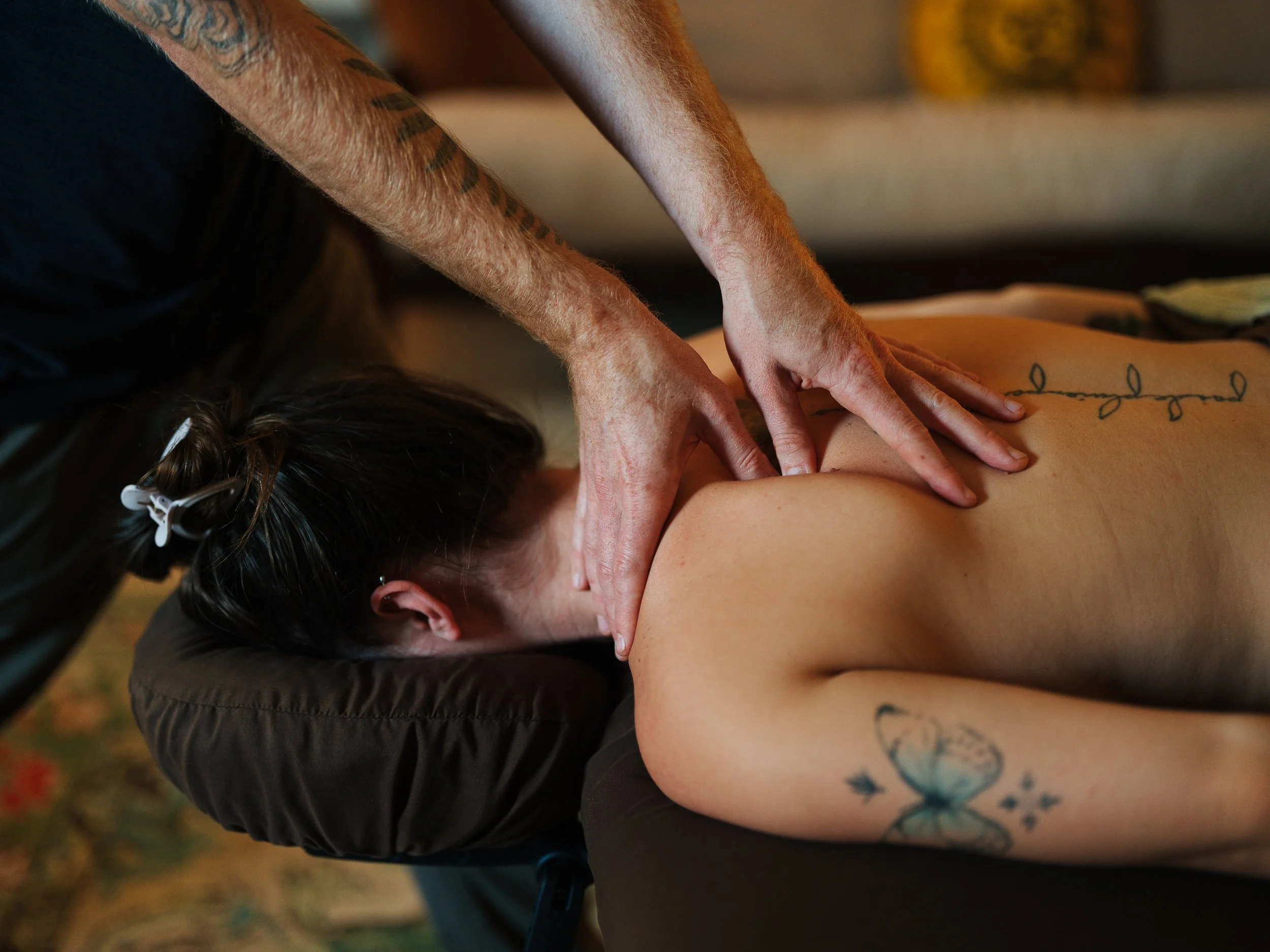
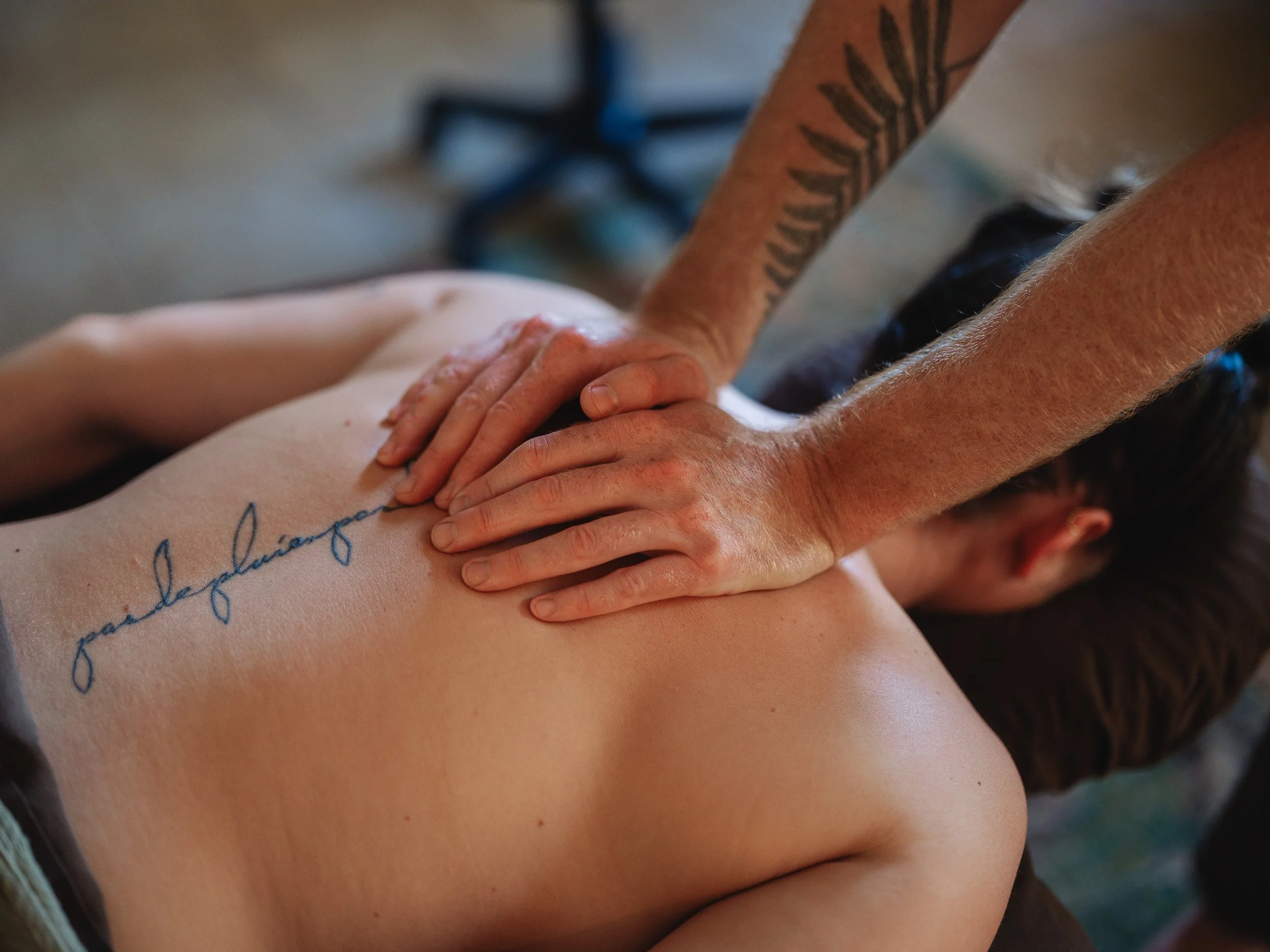
You've probably seen the circular marks on athletes, celebrities, and your yoga-loving friends. Cupping therapy has entered the mainstream — but it's far from new. This ancient healing technique has been used for thousands of years in Traditional Chinese Medicine, and it remains one of the most effective tools in a bodyworker's toolkit.
At Zen Fox Healing Arts in West Asheville, cupping is one of the most requested add-ons to massage sessions — and for good reason. Here's everything you need to know before your first cupping experience.
What Is Cupping Therapy?
Cupping therapy uses suction cups placed on the skin to create negative pressure. Instead of pushing into muscle tissue like massage, cupping lifts tissue upward — drawing blood flow into stagnant areas, separating layers of fascia, and releasing tension from the inside out.
The cups are typically silicone or glass. At Zen Fox Healing Arts, Michael uses both static cupping (cups placed and left in position for several minutes) and dynamic cupping (cups glided across oiled skin) depending on what your body needs.
How Does Cupping Work?
The suction created by the cups does several things simultaneously:
- Increases local blood flow — Fresh, oxygenated blood rushes into the area, accelerating healing and flushing metabolic waste
- Separates fascial layers — The lifting action pulls apart adhesions between skin, fascia, and muscle that contribute to stiffness and restricted movement
- Stimulates the lymphatic system — Cupping promotes drainage of lymphatic fluid, reducing inflammation and puffiness
- Activates the parasympathetic nervous system — Many clients report a deeply relaxing, almost meditative response to cupping
- Releases trigger points — The sustained negative pressure can relieve deep muscle knots that are difficult to reach with hands alone
Benefits of Cupping Therapy
Research and clinical experience support cupping for a wide range of conditions:
- Chronic back and neck pain — One of the most evidence-supported applications
- Muscle recovery after exercise — Especially popular with hikers and athletes in the Asheville area
- Shoulder and upper trap tension — The areas where most people carry stress
- IT band tightness — Common in runners and cyclists around Western North Carolina
- Headaches and migraines — Particularly tension-type headaches originating from the neck and shoulders
- Respiratory congestion — Cupping on the upper back can help open the chest
- Stress and anxiety — The deep relaxation response cupping triggers is profoundly calming
What to Expect During a Cupping Session
If you're booking cupping at Zen Fox Healing Arts, here's what the experience looks like:
Before the Session
Michael will ask about your areas of concern, any medications you're taking, and your experience with cupping. He'll explain the sensation and what the marks mean before starting.
During the Session
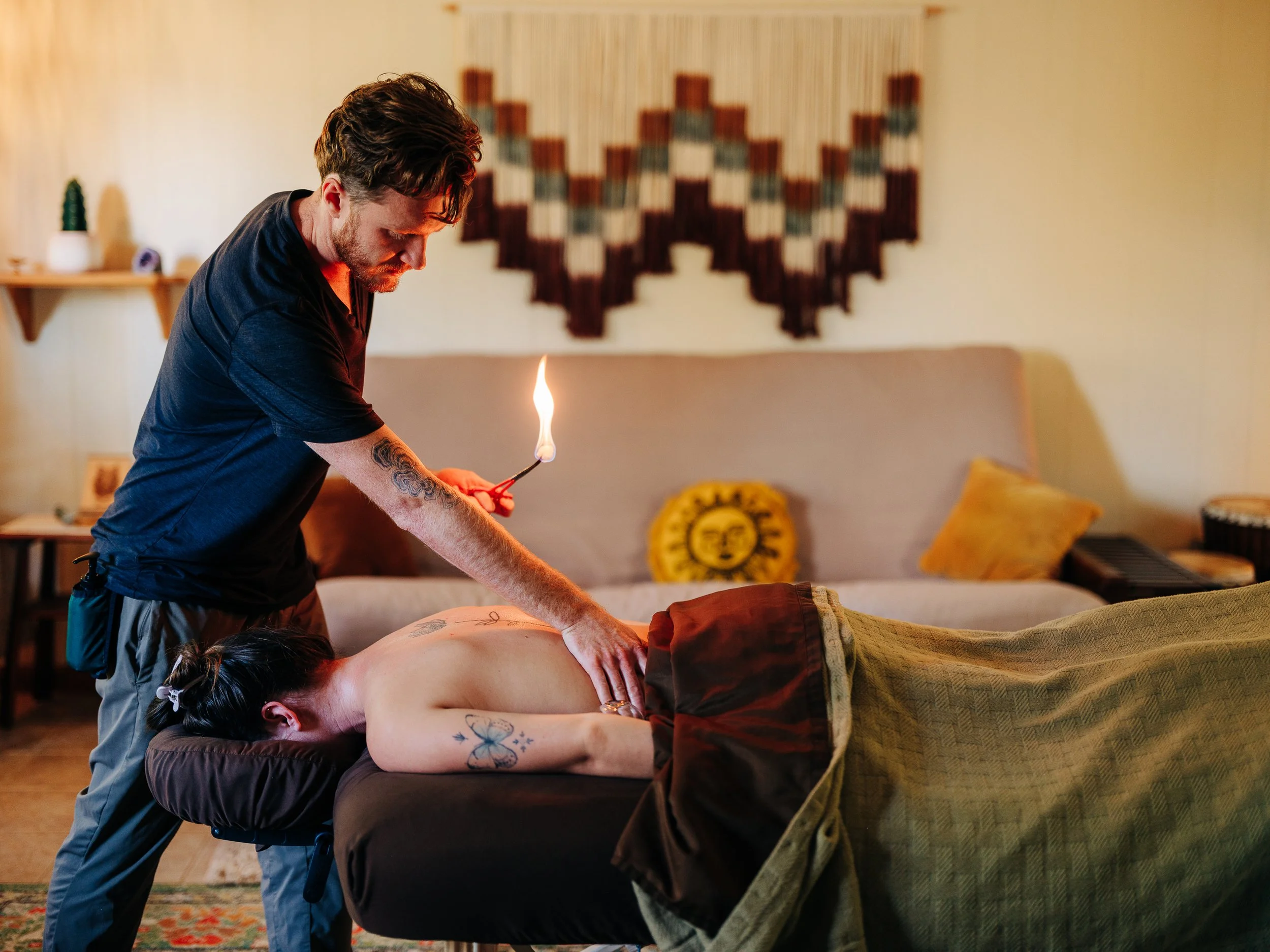
Cupping is typically integrated into a massage session rather than done as a standalone treatment. Michael might use massage to warm the tissue first, then apply cups to areas that need deeper release. The sensation feels like a strong pulling or suction — most people describe it as intense but not painful. Many find it deeply satisfying, especially on chronically tight areas.
Cups typically stay in place for 5–10 minutes for static cupping. Dynamic cupping involves gliding the cups along oiled muscles, which feels like a deep massage in reverse.
The Marks
Cupping leaves circular marks that range from light pink to deep purple. These are not bruises — they're caused by blood being drawn to the surface and are actually a sign that stagnant blood is being moved. The marks typically fade within 3–7 days, sometimes faster. Darker marks generally indicate more stagnation in that area.
Aftercare: What to Do After Cupping
- Hydrate generously — Drink extra water for the 24 hours following your session to help flush released toxins
- Avoid extreme temperatures — Skip hot tubs, saunas, and ice baths for 4–6 hours after treatment
- Keep the area covered — Avoid direct sun exposure on cupping marks for a few days
- Rest if needed — Some people feel energized; others feel deeply relaxed. Honor what your body tells you
- Gentle movement is fine — Light stretching and walking are great. Save the intense workout for the next day
Who Should Avoid Cupping?
Cupping isn't suitable for everyone. It should be avoided if you:
- Are on blood thinners or have a bleeding disorder
- Have sunburned, inflamed, or broken skin in the treatment area
- Are pregnant (certain areas should be avoided)
- Have a fever or acute illness
Michael always screens for contraindications before incorporating cupping into your session.
Cupping Combined with Massage
At Zen Fox Healing Arts, cupping is most effective when paired with other modalities. In an integrative massage session, Michael might use deep tissue work to address the surface tension, then apply cups to pull out deeper stagnation that hands alone can't reach. The combination accelerates recovery dramatically.
This is especially powerful for clients who are active in the Asheville outdoor scene — trail runners, mountain bikers, hikers who push hard on the Blue Ridge Parkway trails and need serious recovery work.
Ready to Try Cupping Therapy?
Book an integrative massage with cupping at Zen Fox Healing Arts in West Asheville. Sessions available in 60, 75, 90, and 120 minutes.
Book Your Session