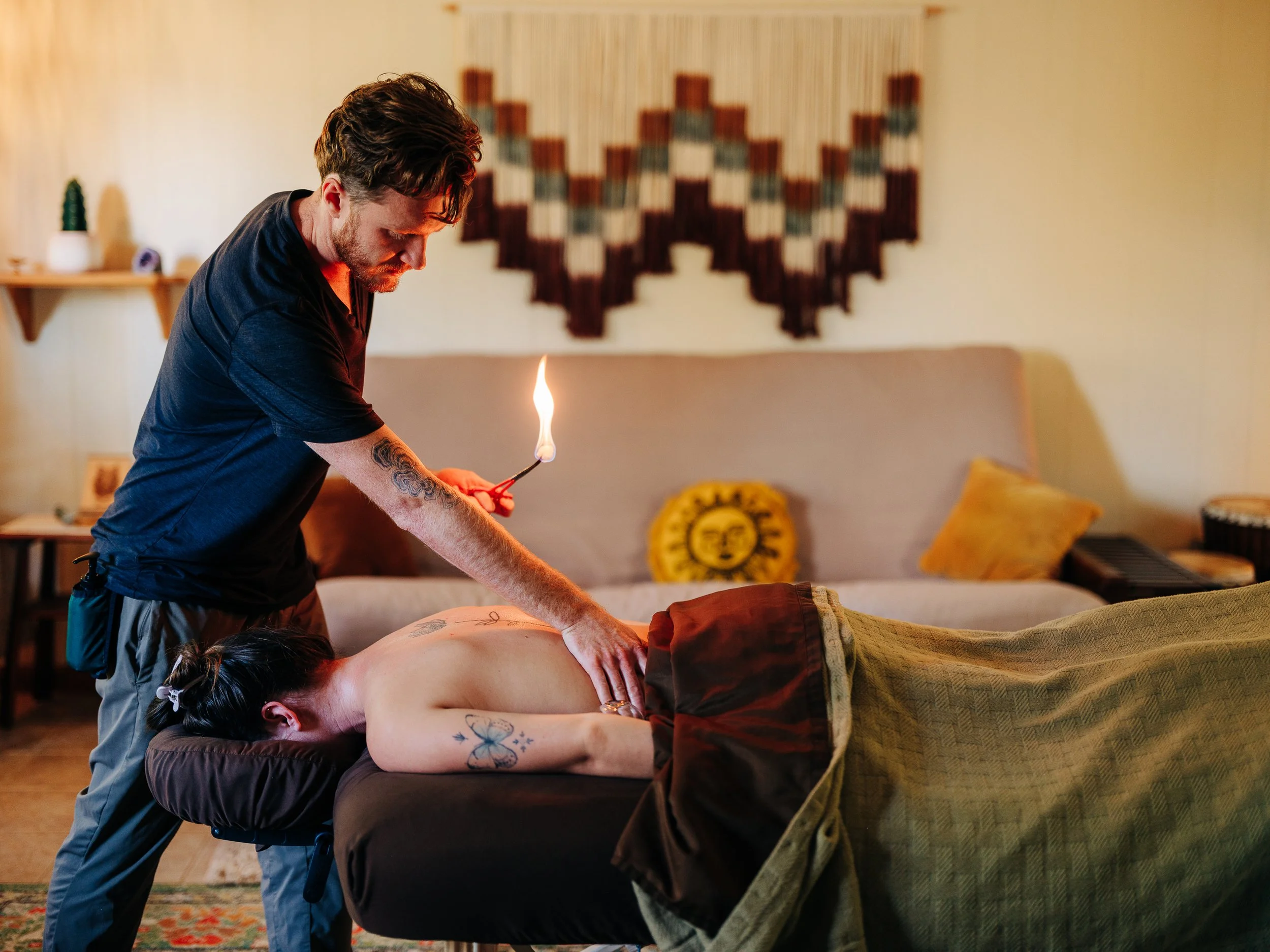
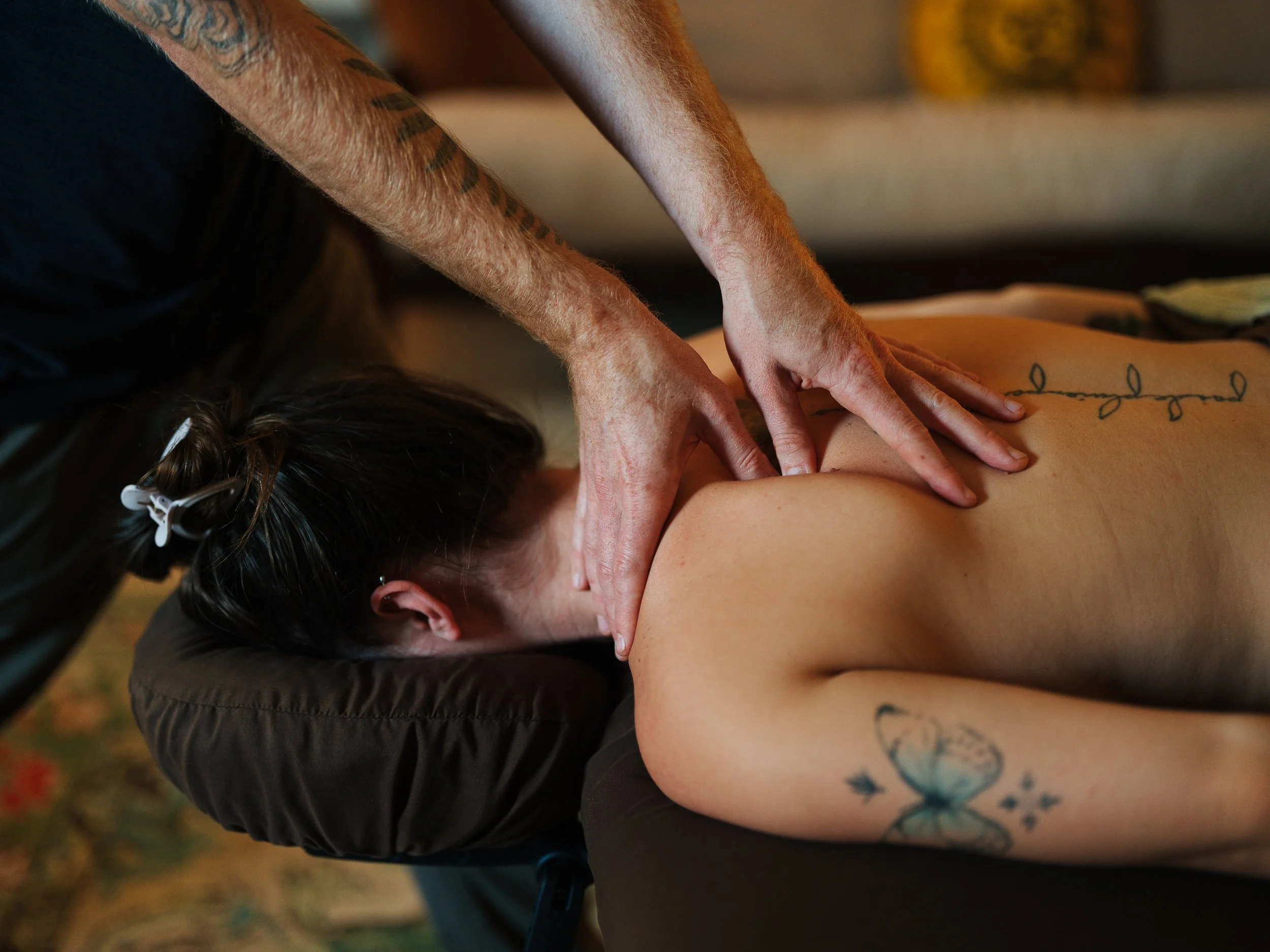
If you've spent any time on social media, you've probably seen influencers gliding a smooth stone across their jawline and calling it gua sha. But the real thing — the clinical, therapeutic version that's been practiced for centuries in Traditional Chinese Medicine — is a completely different experience. And it's one of the most powerful tools for chronic pain relief that most people have never tried.
At Zen Fox Healing Arts in West Asheville, gua sha is a core part of the bodywork Michael offers — integrated into massage sessions to reach tissue that hands and even cupping can't fully address.
What Is Gua Sha?
Gua sha (pronounced "gwah shah") is a Traditional Chinese Medicine technique that involves pressing a smooth-edged tool across oiled skin in firm, repeated strokes. The word "gua" means to scrape or rub, and "sha" refers to the sand-like redness that rises to the skin's surface during treatment — a visible sign that stagnant blood is being moved and circulation is being restored.
The technique works by stimulating blood flow and the movement of qi (life energy) through the body's meridians. In Western terms, gua sha creates a controlled therapeutic response that increases microcirculation by up to 400% in the treated area, breaks up fascial adhesions, and triggers the body's natural anti-inflammatory processes.
How Gua Sha Works in Massage Therapy
During a gua sha treatment, a smooth-edged tool — traditionally made from jade, horn, or ceramic, and now often medical-grade stainless steel — is pressed firmly across oiled skin in one direction using repeated strokes. The practitioner works systematically across the treatment area, applying consistent pressure to:
- Stimulate microcirculation — Drawing fresh, oxygenated blood into areas of chronic tension and stagnation
- Break up fascial adhesions — The scraping action separates layers of tissue that have become stuck together from injury, overuse, or chronic holding patterns
- Release metabolic waste — Stagnant cellular debris that contributes to pain and stiffness is flushed out through increased blood and lymph flow
- Activate the body's anti-inflammatory response — Research shows gua sha upregulates heme oxygenase-1 (HO-1), an enzyme with powerful anti-inflammatory and immune-boosting effects
Gua Sha vs. Facial Gua Sha: Not the Same Thing
Let's clear something up. The gua sha you've seen on TikTok and Instagram — the gentle jade roller work along the cheekbones and jawline — is cosmetic facial massage. It can be lovely for reducing puffiness and promoting a healthy glow, but it's a very light adaptation of the real technique.
Therapeutic body gua sha is much deeper clinical work. It involves significant pressure applied to large muscle groups like the upper trapezius, erector spinae, and IT band. It produces visible sha (the characteristic redness), and it creates measurable physiological changes in the tissue. Think of it this way: facial gua sha is to therapeutic gua sha what a gentle foot rub is to deep tissue sports massage. Same family, entirely different intensity and purpose.
Benefits of Gua Sha Therapy
Research and centuries of clinical practice support gua sha for a wide range of conditions. Here's what it can do:
Chronic Pain Relief
Gua sha is exceptionally effective for chronic neck, back, and shoulder pain. A 2011 study published in Pain Medicine found that a single gua sha treatment significantly reduced pain in patients with chronic neck pain, with benefits lasting a full week. For people who carry tension in their upper traps and between the shoulder blades, gua sha can provide relief where standard massage falls short.
Reduces Inflammation
The scraping action triggers the production of HO-1, an enzyme that acts as a potent anti-inflammatory agent at the cellular level. This isn't just surface-level relief — it's a measurable biochemical response that reduces inflammation from the inside out.
Improves Range of Motion
By breaking up adhesions between fascial layers and muscle fibers, gua sha restores movement in areas that have become restricted. Clients frequently report being able to turn their head further, reach higher, or bend more freely after a session.
Boosts Immune Response
The upregulation of HO-1 doesn't just fight inflammation — it also enhances immune function. Some Traditional Chinese Medicine practitioners use gua sha at the first sign of a cold, applying it to the upper back and neck to stimulate the body's defensive qi.
Accelerates Muscle Recovery
For athletes and active individuals, gua sha speeds recovery by flushing lactic acid and metabolic waste from overworked muscles while flooding the tissue with fresh blood. It's an excellent complement to training for runners, climbers, and cyclists in the Asheville area.
Breaks Up Scar Tissue and Adhesions
Old injuries often leave behind scar tissue that limits mobility and creates compensatory pain patterns. Gua sha's repeated stroking action helps remodel scar tissue and break apart the cross-linked collagen fibers that keep tissue bound up.
What Does Gua Sha Feel Like?
Gua sha produces a firm, rhythmic scraping sensation across the skin. The pressure is deep and deliberate. Most people describe it as intense — especially in areas of significant tension or stagnation — but it should not feel like sharp or stabbing pain.
It's the kind of intensity that feels productive. You can feel the tool working through layers of tightness, and there's often an immediate sense of release when it passes over a stubborn adhesion.
Michael adjusts the pressure based on your comfort level and the condition of the tissue. Some areas will take more pressure easily; others will be more sensitive. Communication during the session ensures the work stays in that therapeutic sweet spot — deep enough to create change, never so intense that your body tenses up against it.
The Marks: What Those Red Spots Mean
Gua sha leaves distinctive red or purple petechiae — small, dot-like marks that appear where the tool has been applied. These marks are often the first thing people notice, and the first thing they ask about.
Here's the important thing: these are not bruises. Bruising is caused by trauma that damages blood vessels. Gua sha marks are caused by stagnant blood being drawn to the surface from deeper tissue layers. It's a sign that the treatment is working — that old, deoxygenated blood is being moved out so fresh blood can take its place.
The marks typically fade within 3–5 days, sometimes sooner. Interestingly, the color of the sha tells the practitioner something: darker marks generally indicate more stagnation in that area, while lighter marks suggest better circulation. Over multiple sessions, many clients notice their sha gets progressively lighter as chronic stagnation resolves.
Gua Sha vs. Cupping
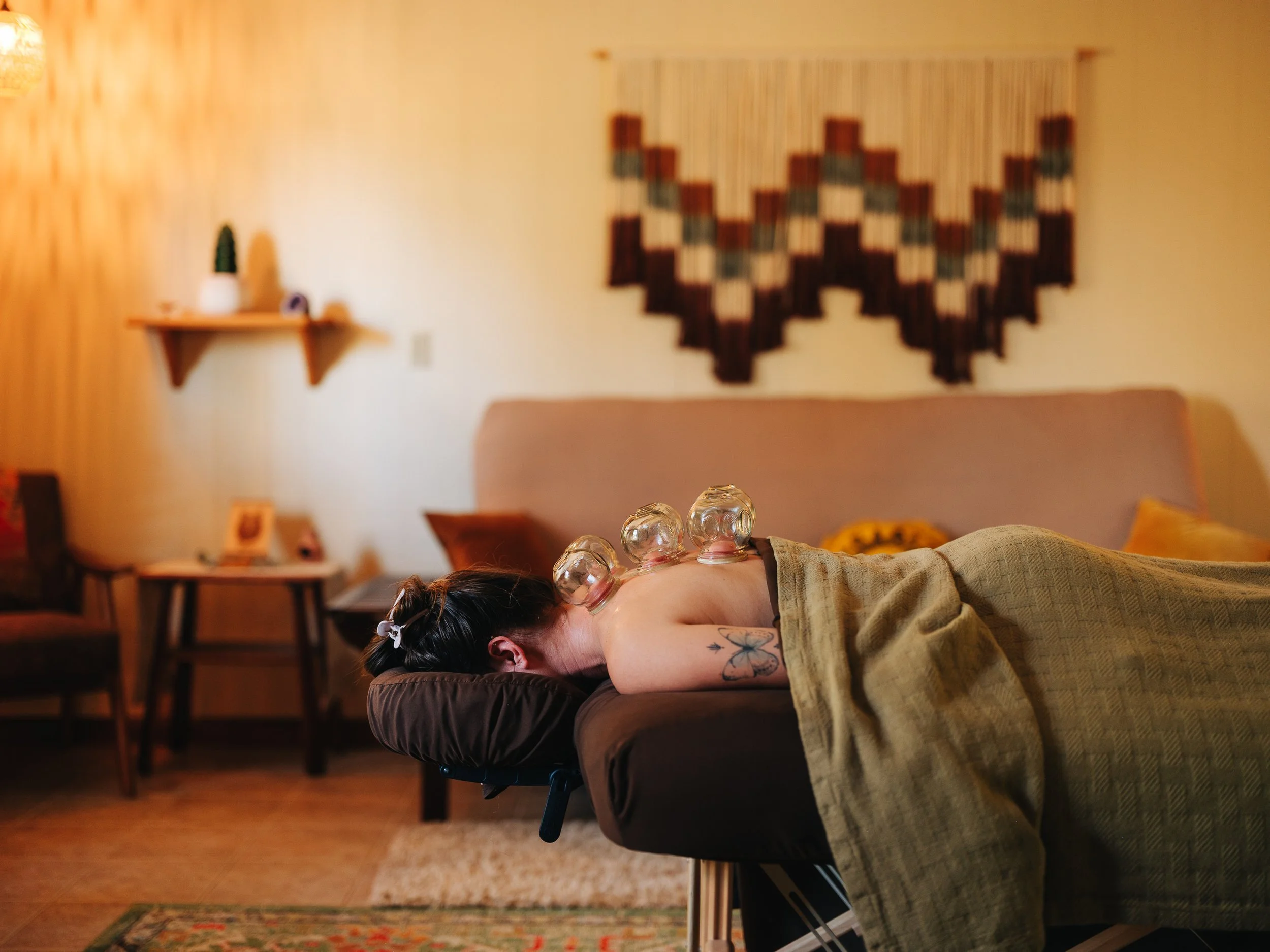
Both gua sha and cupping therapy are Traditional Chinese Medicine techniques that bring stagnant blood to the surface and restore circulation. They're close relatives, but they work differently:
- Gua sha uses scraping — A tool is pressed across the skin in one direction, working horizontally through tissue layers
- Cupping uses suction — Cups create negative pressure that lifts tissue vertically, pulling layers apart
- Gua sha is more targeted — The tool can follow the exact contours of a muscle or work into small, specific areas like the suboccipitals at the base of the skull
- Cupping covers broader areas — Cups are excellent for large muscle groups and for creating a general decompression effect
The two techniques complement each other beautifully and are often used together in the same session. Michael may use cupping to broadly decompress an area, then follow up with gua sha to address specific adhesions and trigger points within that same tissue.
How Michael Uses Gua Sha at Zen Fox Healing Arts
At Zen Fox Healing Arts, gua sha is integrated directly into integrative massage sessions rather than offered as a standalone treatment. This allows Michael to warm the tissue with hands-on massage first, then apply gua sha to areas that need deeper intervention.
The most common areas Michael treats with gua sha include:
- Upper trapezius and levator scapulae — Where most people carry stress and tension from desk work
- Erector spinae (along the spine) — For chronic low back pain and postural imbalance
- IT band and lateral thigh — Common trouble spots for runners, hikers, and cyclists
- Rhomboids and mid-back — The area between the shoulder blades that gets locked up from computer work and forward head posture
- Posterior neck and suboccipitals — For tension headaches and cervicogenic pain
By combining gua sha with deep tissue massage, myofascial release, and cupping, Michael can address chronic pain patterns from multiple angles in a single session — something that hands-on massage alone often can't fully accomplish.
Who Should Try Gua Sha?
Gua sha is particularly beneficial for:
- Athletes and active people — Runners, trail hikers, mountain bikers, and climbers in the Asheville and Western North Carolina area who need faster recovery between training sessions
- Chronic pain sufferers — Anyone dealing with persistent neck, back, or shoulder pain that hasn't fully resolved with standard massage
- Desk workers — Remote workers and office professionals who spend long hours in static postures, developing chronic tension in the upper back, neck, and shoulders
- People who haven't responded to standard massage alone — If you've been getting regular massages but certain areas remain stubbornly tight, gua sha may be the missing piece
- Post-injury recovery — Anyone working through old injuries with lingering scar tissue or restricted range of motion
Located off Brevard Road near the NC Arboretum in West Asheville's active Bent Creek community, Zen Fox Healing Arts is well-positioned for the athletes, outdoor enthusiasts, and active professionals who benefit most from this kind of deep therapeutic work.
Ready to Experience Therapeutic Gua Sha?
Book an integrative massage session with gua sha at Zen Fox Healing Arts in West Asheville. Sessions available in 60, 75, 90, and 120 minutes.
Book Your Session