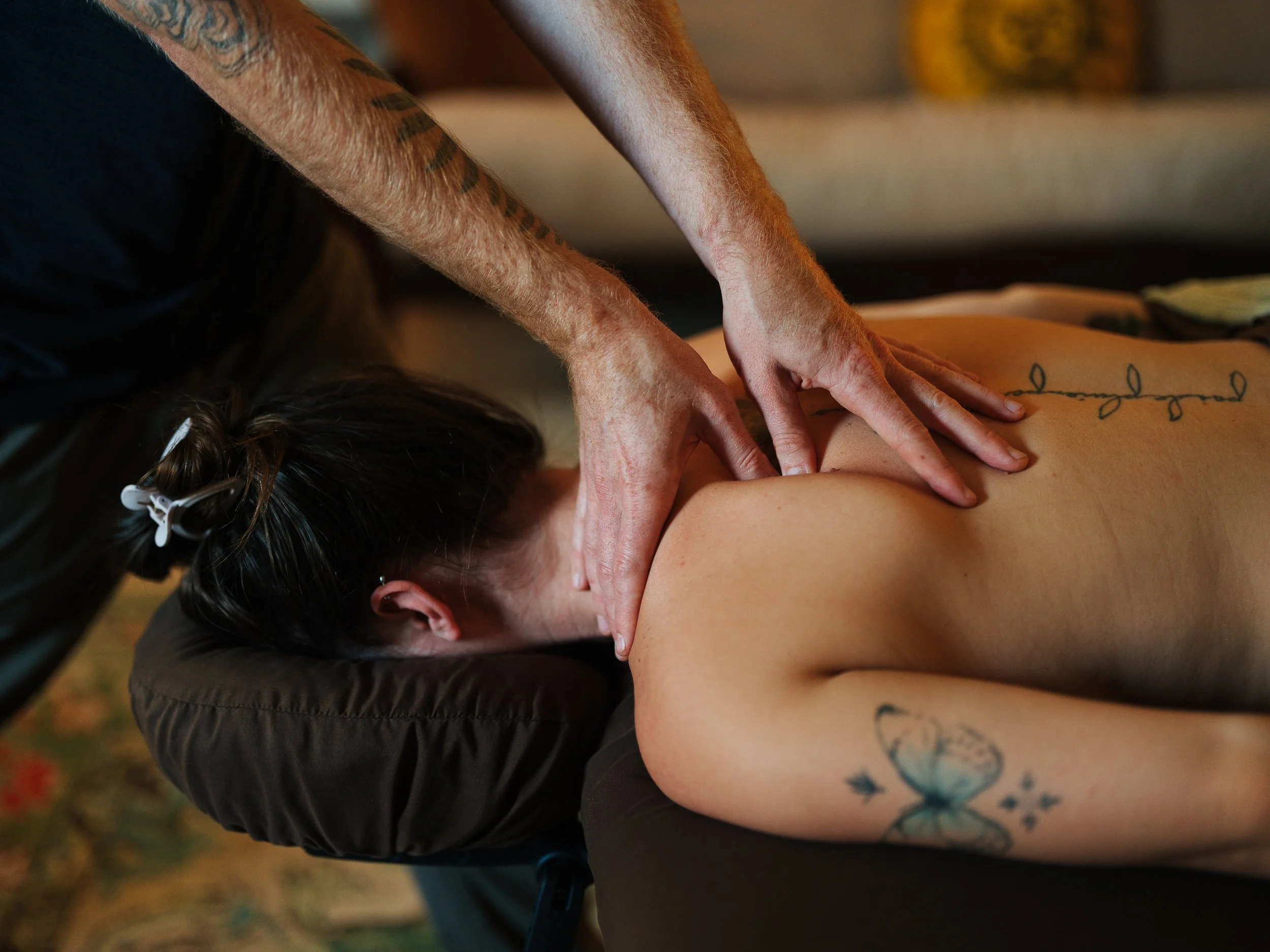
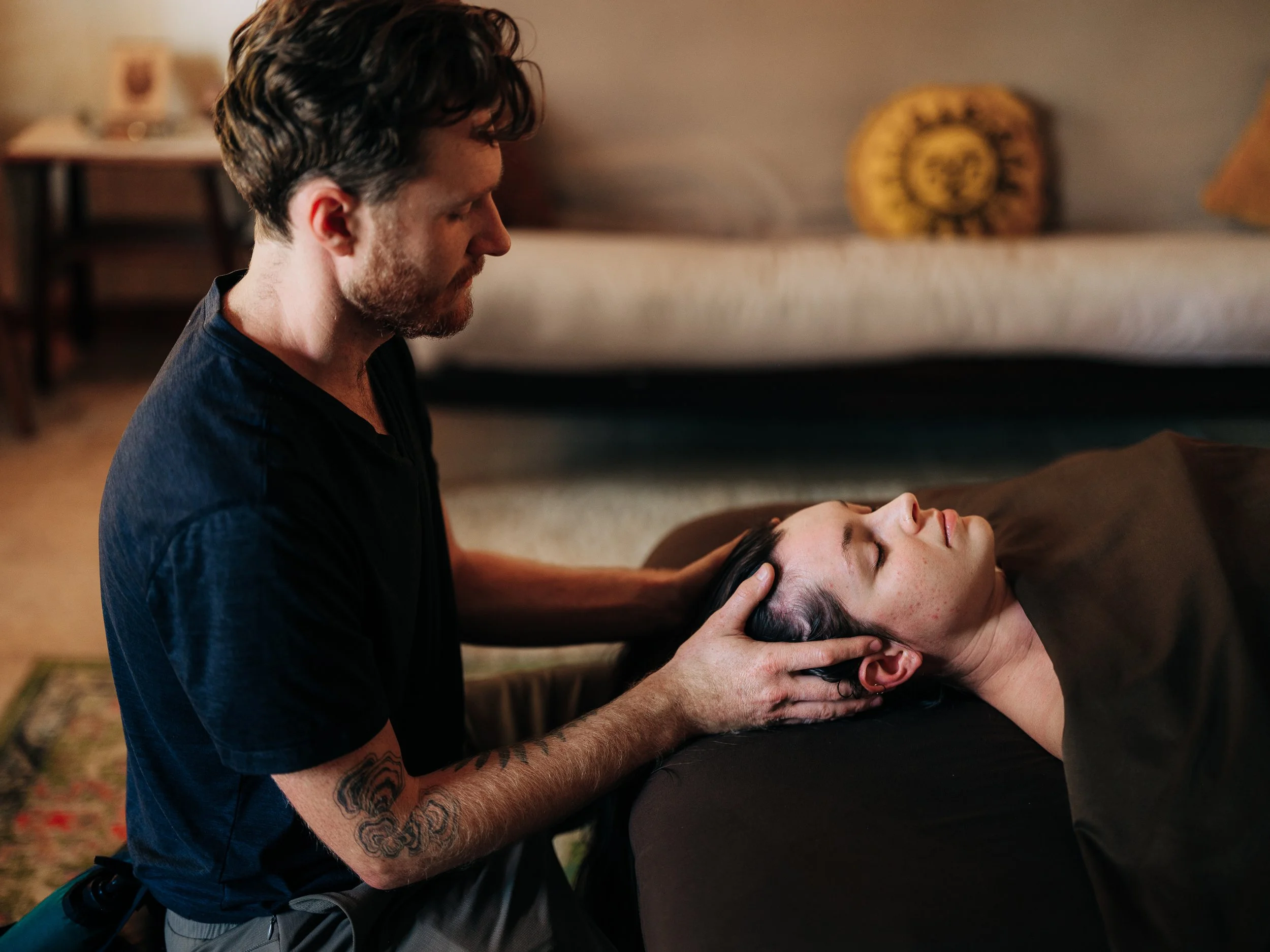
Your body is constantly talking to you. The question is whether you're listening. Pain, stiffness, poor sleep, and lingering tension are not just minor inconveniences — they're signals that something needs attention. Massage therapy isn't a luxury; it's one of the most effective ways to address what your body is telling you before it becomes a bigger problem.
At Zen Fox Healing Arts in West Asheville, Michael Fox, LMBT, sees these patterns every day. Here are seven signs that it's time to get on the table — and exactly which type of massage to book for each one.
1. You Wake Up with a Stiff Neck or Shoulders
If the first thing you notice every morning is a tight, aching neck or shoulders that take an hour to loosen up, your body is holding tension even while you sleep. This is one of the most common complaints Michael hears from clients in the Asheville area — and it rarely gets better on its own. Chronic stiffness in the neck and upper trapezius muscles is often caused by a combination of postural habits, stress, and fascial restrictions that build up over time.
What to book: An integrative massage is ideal here. Michael blends deep tissue, myofascial release, and Swedish techniques to address the layers of tension causing morning stiffness. Rather than applying one approach across the board, integrative work targets the specific structures that are locked up — your upper traps, levator scapulae, and suboccipital muscles — with the right pressure and technique for each.
2. You Have Tension Headaches More Than Once a Week
Tension headaches that wrap around your temples or radiate from the base of your skull are almost always muscular in origin. They stem from trigger points — hyperirritable spots in taut bands of muscle — in your neck, jaw, and upper back. If you're reaching for ibuprofen multiple times a week, that's a clear sign the underlying issue needs hands-on attention, not just symptom management.
What to book: Ask for trigger point therapy combined with myofascial release. Michael will locate the specific trigger points in your suboccipitals, SCM, and upper trapezius that are referring pain into your head, then use sustained pressure and fascial techniques to release them. Many clients report immediate headache relief during the session and a significant reduction in frequency over the following weeks.
3. Your Range of Motion Feels Limited
Can you turn your head fully to check your blind spot while driving? Can you reach behind your back without wincing? If your body feels like it's losing flexibility — whether from age, activity, or simply sitting too much — restricted range of motion is a sign that your fascia and muscles have shortened and tightened. Left unaddressed, limited mobility leads to compensatory movement patterns that create new problems.
What to book: Thai massage is one of the most effective modalities for restoring range of motion. Sometimes called "lazy person's yoga," Thai massage involves assisted stretching, compression, and rhythmic movement performed on a mat with you fully clothed. Michael uses Thai techniques to systematically open the hips, shoulders, and spine — areas where most people lose mobility first. It's especially popular with hikers and climbers who explore the trails near the Blue Ridge Parkway and need to maintain full-body flexibility.
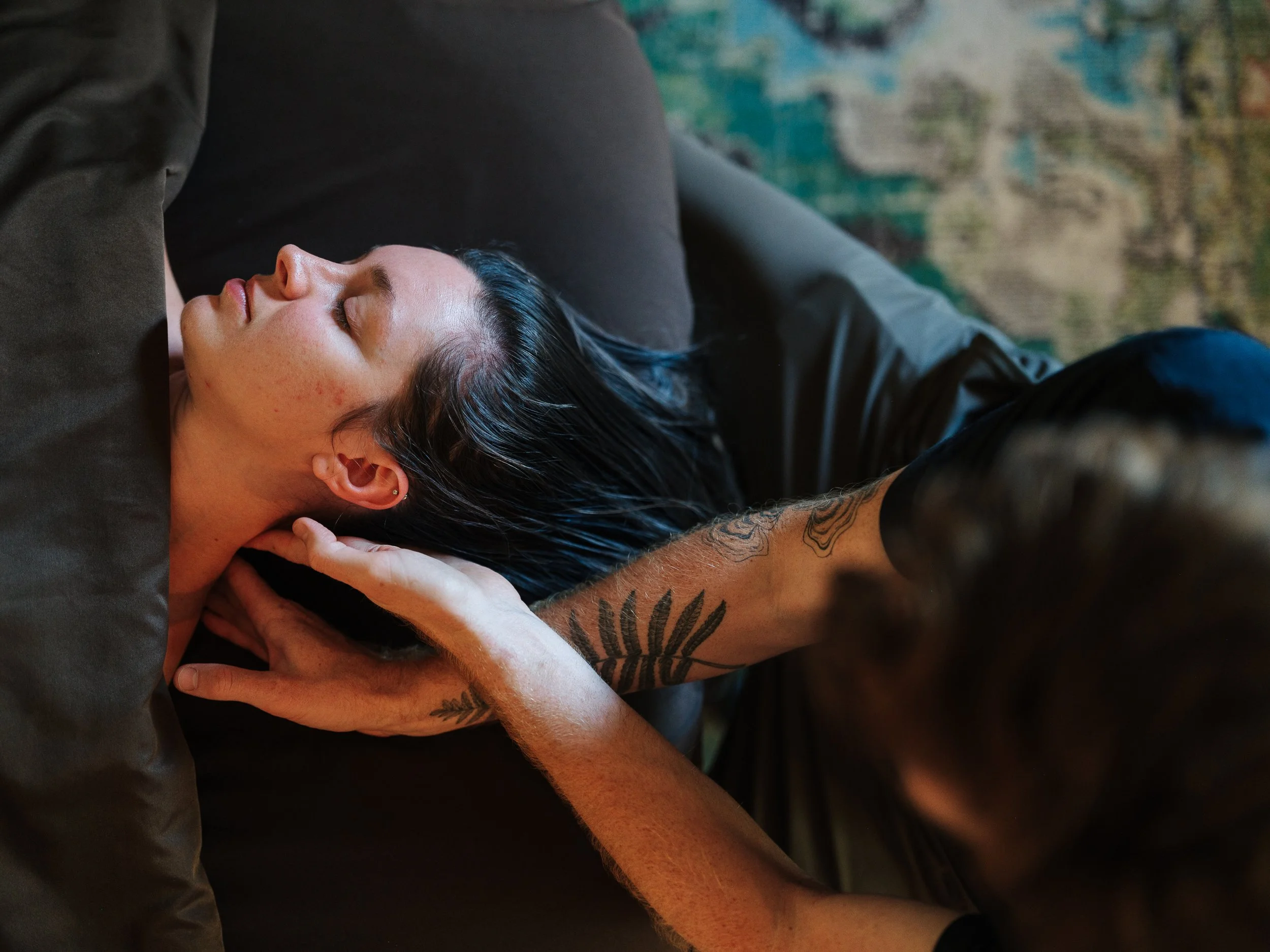
4. You Sit at a Desk More Than 6 Hours a Day
Prolonged sitting is one of the most underestimated sources of chronic pain. When you sit for six or more hours a day, your hip flexors shorten, your chest muscles tighten, your shoulders round forward, and your posterior chain weakens. Over weeks and months, this creates a cascade of dysfunction: lower back pain, neck tension, rounded posture, and compressed breathing. Even if you exercise regularly, sitting undoes much of that benefit.
What to book: An integrative massage or a Swedish-based session focused on postural correction. Michael targets the specific muscle groups that get shortened and overloaded from desk work — the pectorals, hip flexors, upper traps, and erector spinae — using a combination of lengthening strokes, targeted deep work, and fascial release. Many remote workers and professionals near Brevard Road and the West Asheville area book regular sessions specifically to counteract the effects of desk life.
5. You're Training Hard but Recovery Is Slow
You're putting in the miles on the trails around the NC Arboretum, pushing your limits on the bike, or hitting the gym consistently — but your muscles feel heavy, sore, and slow to bounce back. Delayed recovery is a sign that your body's natural repair processes are overwhelmed. Metabolic waste builds up in the tissue, microtears don't heal efficiently, and fascia becomes sticky and restricted.
What to book: A combination of cupping therapy and deep tissue massage. Cupping lifts the tissue and draws fresh, oxygenated blood into stagnant areas, while deep tissue work breaks up adhesions and restores normal muscle function. This combination is one of the most effective recovery protocols available — it's why competitive athletes and serious recreational athletes in Western North Carolina rely on it. Michael integrates both into a single session so you get maximum recovery benefit in one visit.
6. You Feel Anxious or Can't Sleep Well
Massage isn't just for physical pain. If you're experiencing persistent anxiety, racing thoughts at bedtime, or waking up in the middle of the night, your nervous system may be stuck in a sympathetic (fight-or-flight) state. Chronic stress keeps your cortisol elevated and your body on high alert, even when there's no immediate threat. This is exhausting, and it manifests as both mental and physical tension.
What to book: A Swedish massage with sound healing is deeply restorative for the nervous system. The long, flowing strokes of Swedish massage activate your parasympathetic response — the "rest and digest" mode your body needs to recover. When paired with sound healing elements like singing bowls or tuning forks, the effect is amplified. The vibrational frequencies help quiet the mind and bring the body into a profoundly relaxed state. Clients who come to Zen Fox Healing Arts for this combination often describe it as the first time they've truly relaxed in months.
7. You Can't Remember Your Last Massage
This might be the most telling sign of all. If you have to think hard about when you last received bodywork — or if the answer is "never" — your body is overdue. Massage therapy is most effective as a consistent practice, not a one-time event. Regular sessions prevent tension from compounding, keep your fascia healthy and mobile, and give your nervous system the regular reset it needs to function well.
What to book: Anything. Seriously. If it's been a while (or if this would be your first massage), an integrative massage is the best starting point. Michael will assess what your body needs during the session and adapt his approach in real time — combining Swedish, deep tissue, myofascial release, and other techniques based on what he finds. You don't need to know exactly what you need; that's his job.
"Most people wait until they're in pain to book a massage. The best time to start is before it gets to that point. Your body will thank you."
How Often Should You Get a Massage?
There's no one-size-fits-all answer, but here are general guidelines based on your situation:
- Chronic pain or active recovery: Every 2 weeks until symptoms stabilize, then monthly maintenance
- Desk workers and moderate activity: Once a month to prevent tension buildup
- Athletes and heavy training: Every 2–3 weeks during peak training periods
- Stress management and general wellness: Monthly sessions provide consistent nervous system support
Michael works with each client to develop a session cadence that fits their body, goals, and budget. Whether you visit the studio off Brevard Road once a week or once a quarter, consistent bodywork makes a measurable difference over time.
Ready to Listen to Your Body?
Book a session at Zen Fox Healing Arts in West Asheville. Michael will help you figure out exactly what your body needs — no guesswork required.
Book Your Session