Close your eyes and imagine the deep, resonant hum of a Tibetan singing bowl washing over you — vibrations you don't just hear, but feel in your bones. Sound healing is one of the oldest therapeutic practices on the planet, and it's experiencing a powerful modern resurgence as people search for ways to regulate their nervous systems without medication.
At Zen Fox Healing Arts in West Asheville, sound healing is woven into the bodywork experience — a natural extension of massage that carries clients into a profoundly deep state of relaxation. Here's everything you need to know about how sound healing works and why it's more than just beautiful noise.
What Is Sound Healing?
Sound healing is a therapeutic practice that uses the vibrations and frequencies produced by acoustic instruments — singing bowls, tuning forks, chimes, gongs, and the human voice — to promote physical, emotional, and energetic well-being. It's sometimes called vibrational therapy, sound therapy, or sonic meditation.
The practice dates back thousands of years. Ancient Greek physicians used flutes and lyres to aid digestion and promote mental health. Aboriginal Australians have used the didgeridoo as a healing instrument for over 40,000 years. Tibetan monks have chanted and played singing bowls for centuries as a path to spiritual awakening. In India, the entire science of Nada Yoga (the yoga of sound) is built on the understanding that sound is the fundamental fabric of reality.
Today, sound healing has moved from monastery to mainstream — backed by a growing body of research showing its measurable effects on brainwave states, heart rate variability, cortisol levels, and pain perception.
How Sound Healing Works
To understand sound healing, you need to understand one fundamental truth: everything vibrates. Every cell in your body, every organ, every bone has a natural resonant frequency. When you're healthy, these frequencies hum along in harmony. When you're stressed, injured, or emotionally overwhelmed, those frequencies fall out of tune — like an orchestra where the instruments are no longer playing together.
Sound healing works through several key mechanisms:
- Entrainment — The tendency of two oscillating bodies to synchronize. When a singing bowl produces a steady frequency, your brainwaves, heart rate, and even cellular vibrations begin to match it. This is why a slow, deep bowl tone can shift you from a stressed beta brainwave state into the deeply relaxed theta state within minutes
- Frequency response — Different frequencies affect the body in different ways. Lower tones tend to ground and calm; higher tones can energize and clarify. The body's water content (roughly 60% of your mass) is an excellent conductor of vibration, allowing sound waves to penetrate deeply into tissue
- Vagal nerve stimulation — Certain frequencies and vibrational patterns stimulate the vagus nerve, activating the parasympathetic nervous system and triggering the body's natural rest-and-repair response
- Brainwave modulation — Sound can guide the brain from alert beta waves (13–30 Hz) into alpha (8–13 Hz, relaxed awareness), theta (4–8 Hz, deep meditation), or even delta (0.5–4 Hz, restorative sleep) states
“Sound healing doesn't add anything to the body. It reminds the body of a frequency it already knows — the frequency of being at ease.”
Instruments Used in Sound Healing
Each instrument carries its own quality and purpose. Here are the most commonly used tools in sound healing practice:
Tibetan Singing Bowls
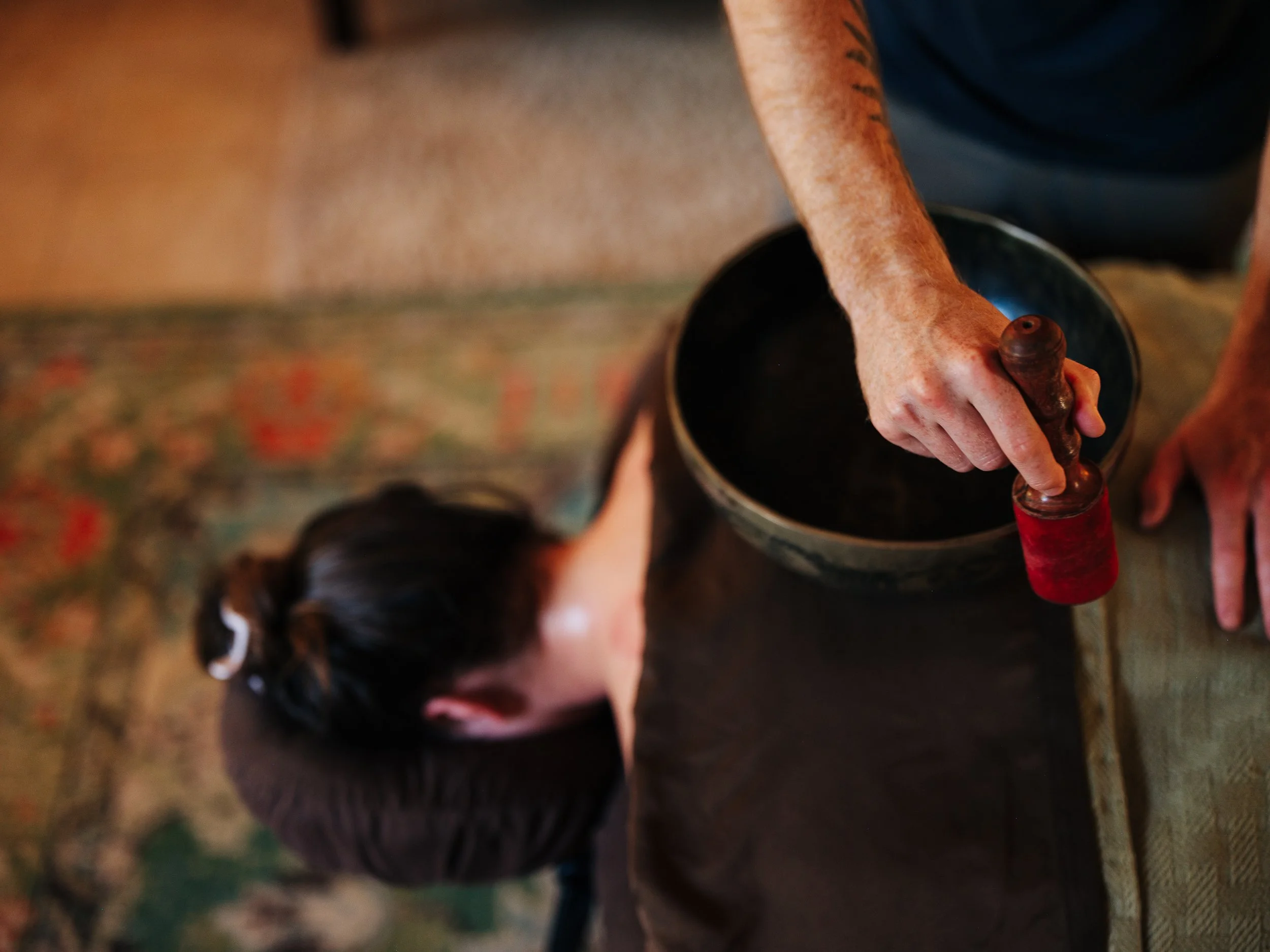
Hand-hammered from a blend of metals (traditionally seven, representing the seven planets), Tibetan bowls produce rich, complex overtones that seem to fill the entire room. When placed on or near the body, you feel the vibration radiating through your tissue. These bowls have been used in Himalayan meditation practice for centuries.
Crystal Singing Bowls
Made from pure quartz crystal, these bowls produce a clear, sustained tone that's almost ethereal. Each bowl is tuned to a specific note, and practitioners often use sets that correspond to different energy centers in the body. The clarity of a crystal bowl can feel like it's cutting through mental fog.
Tuning Forks
Precision instruments that produce a single, pure frequency. Tuning forks can be placed on specific points of the body — joints, bones, acupressure points — to deliver targeted vibration. They're especially useful for pinpoint work on areas of pain or tension.
Chimes and Bells
High-frequency instruments that produce sparkling, transient tones. Chimes are often used to mark transitions in a session or to gently bring awareness back to the present moment. Their sound tends to activate the upper body and create a sense of spaciousness.
What a Sound Healing Session Feels Like
If you've never experienced sound healing, the first thing most people notice is how quickly they drop into a deep state of relaxation. Within the first few minutes of sustained bowl tones, the mental chatter begins to quiet. Breathing slows. Muscles let go.
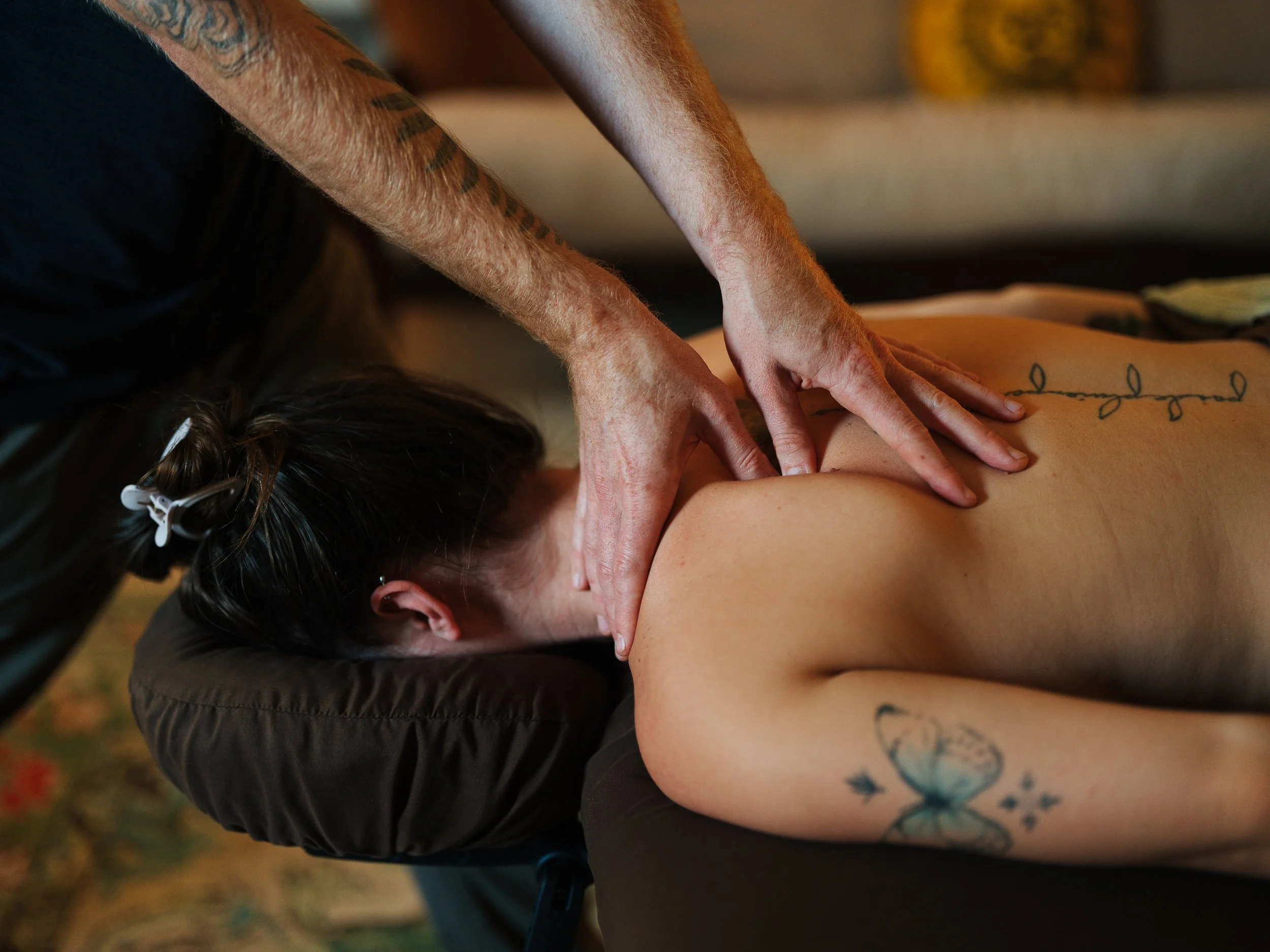
At Zen Fox Healing Arts, sound healing is often woven into the final portion of an integrative massage session. After the deep tissue work, myofascial release, and manual therapy have addressed the physical layers, Michael introduces singing bowls and tonal instruments to carry you even deeper — into a state where emotional holding patterns and nervous system tension can finally release.
Common sensations during a sound healing session include:
- A tingling or buzzing feeling throughout the body
- A sense of warmth or gentle pulsing in specific areas
- Feeling like you're floating or weightless
- Visual imagery — colors, landscapes, or memories
- Emotional release — tears, laughter, or a profound sense of peace
- Time distortion — 20 minutes can feel like 5 (or 60)
- Falling into a deeply restorative sleep-like state while remaining aware
It's not uncommon for clients to say that the sound healing portion of their session was the most transformative part — the moment where everything shifted from "relaxed muscles" to "whole-body reset."
Benefits of Sound Healing
The benefits of sound healing extend far beyond relaxation, though that alone is worth the experience. Research and clinical practice support sound healing for:
- Deep relaxation and stress reduction — Sound healing activates the parasympathetic nervous system faster than almost any other modality, reducing cortisol and adrenaline levels
- Nervous system regulation — Particularly valuable for people stuck in fight-or-flight mode, sound vibration helps reset the autonomic nervous system to a balanced state
- Improved sleep — Many clients report sleeping more deeply and falling asleep more easily for days after a session that includes sound healing
- Emotional release — Vibration can access emotional patterns stored in the body that talk therapy alone may not reach. It's not unusual to experience a cathartic release during a session
- Pain reduction — Studies show that sound therapy can reduce perceived pain intensity, particularly for chronic pain conditions
- Enhanced meditation — Even experienced meditators report reaching deeper states more quickly with sound support. For beginners, sound gives the mind an anchor that makes meditation far more accessible
- Reduced anxiety and depression symptoms — The combination of vagal nerve activation, brainwave entrainment, and deep relaxation creates measurable shifts in mood and emotional regulation
Sound Healing vs. Sound Bath
These terms are often used interchangeably, but there's an important distinction:
Sound healing is typically a one-on-one therapeutic experience. The practitioner works with instruments placed on or very near the body, tailoring the frequencies and vibrations to the individual's specific needs. It's intentional, targeted, and deeply personal. This is the approach Michael uses at Zen Fox Healing Arts.
A sound bath is a group experience where participants lie down in a room while a facilitator plays a variety of instruments. The sound "washes" over everyone simultaneously. Sound baths are wonderful — they're accessible, communal, and a great introduction to the power of vibration. But they lack the personalized, hands-on approach of individual sound healing work.
Think of it this way: a sound bath is like attending a yoga class. Individual sound healing is like having a private session with a practitioner who knows your body and can respond in real time to what it needs.
Who Is Sound Healing For?
Sound healing is accessible to virtually everyone — there are no physical demands, no positions to hold, no prior experience required. You simply lie down and receive. That said, some people find it especially transformative:
- People with anxiety — The immediate nervous system regulation is powerful for those who live in a chronic state of hypervigilance
- Insomnia sufferers — Sound healing teaches the body how to downshift, making it easier to access sleep naturally
- Those carrying emotional stress — Grief, burnout, major life transitions — sound vibration reaches the places where emotions get stuck in the body
- Chronic pain patients — When combined with bodywork, sound healing can address both the physical and neurological components of persistent pain
- Meditation practitioners — Sound provides a powerful support for deepening an existing practice
- Anyone feeling "stuck" — When you can't quite name what's wrong but you know something needs to shift, sound healing often finds what the thinking mind can't
How Michael Incorporates Sound Healing Into Bodywork
At Zen Fox Healing Arts, sound healing isn't offered as an isolated service — it's part of the integrative approach that makes each session unique. Michael's background in multiple bodywork modalities allows him to read what each client's body needs in the moment, and sound healing is one of the most powerful tools in that toolkit.
A typical session might begin with deep tissue massage to release muscular tension, transition into myofascial work to address the connective tissue, and then close with 15–20 minutes of sound healing that carries the body into a state of deep integration. The manual work opens the physical body; the sound work opens everything else.
This layered approach — combining integrative massage therapy with vibrational healing — creates results that neither modality achieves alone. The body gets to experience release on every level: muscular, fascial, nervous system, and energetic.
Why Asheville Is a Hub for Sound Healing
It's no accident that sound healing thrives in Asheville. This city has long been a magnet for holistic wellness practitioners, healers, and seekers. The Blue Ridge Mountains themselves create a natural acoustic environment — a stillness and resonance that amplifies the experience of sound work.
Asheville's holistic community supports everything from crystal bowl concerts in local studios to private sound healing sessions integrated into bodywork. It's a place where these practices aren't considered fringe — they're woven into the fabric of how people approach health and well-being.
Zen Fox Healing Arts is located in West Asheville on Brevard Road, near the NC Arboretum and the Bent Creek area. The studio's quiet, residential setting — away from the bustle of downtown — naturally supports the kind of deep stillness that sound healing requires. When you walk in, you're already beginning to downshift.
Experience Sound Healing in Your Next Session
Book an integrative massage at Zen Fox Healing Arts and experience how sound healing deepens the bodywork. Sessions available in 60, 75, 90, and 120 minutes.
Book Your Session